
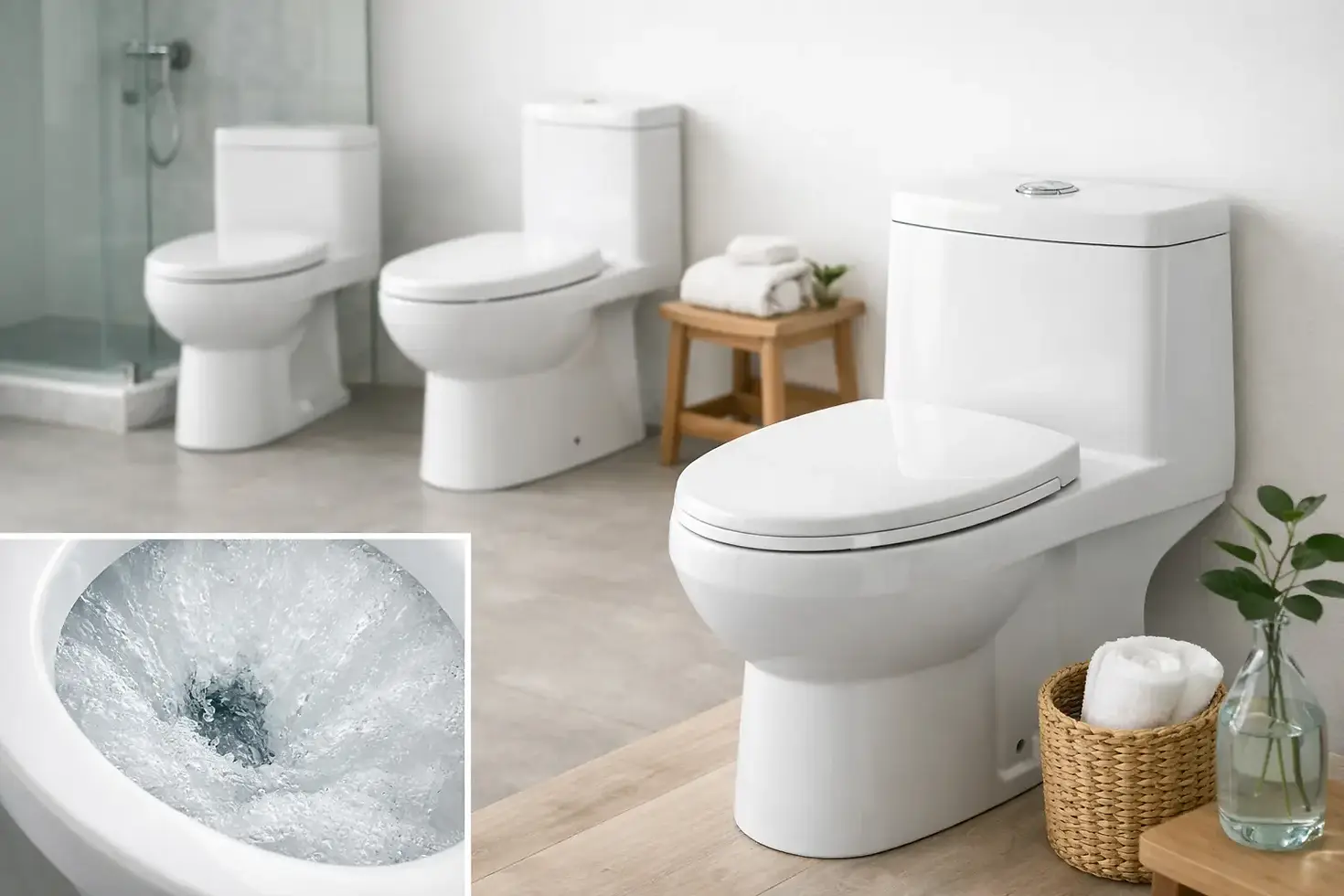
7 Best Low Flow Toilet Options

Your toilet should clear the bowl on the first flush, keep your water bill from acting like a rocket launch, and fit your bathroom without turning installation into a space mission. If you’re shopping for the best low flow toilet options, that’s really the balance you’re after - solid performance, lower water use, and fewer headaches later.
Around Goodyear and the Phoenix Valley, that choice matters more than a lot of homeowners expect. Water efficiency is a smart move in Arizona, but nobody wants to save water by signing up for weak flushes, constant clogs, or a toilet that feels too short, too loud, or too flimsy for daily use. The good news is that modern low flow toilets are a lot better than the older generation that gave efficiency a bad name.
What actually makes a toilet low flow?
A low flow toilet uses less water per flush than older models. Most modern efficient toilets land at 1.28 gallons per flush, while some older units used 3.5 gallons or more. That difference adds up fast in a busy household.
But gallons per flush only tell part of the story. What matters in real life is how well the toilet moves waste, how often it needs a second flush, and whether the internal parts hold up. A toilet that technically saves water but needs repeat flushing is not doing your wallet or your plumbing any favors.
Best low flow toilet options for most homes
If you want the short version, the best low flow toilet options usually fall into seven practical categories rather than one perfect model for everyone.
1. Gravity-fed 1.28 GPF toilets
For a lot of homes, this is the sweet spot. Gravity-fed toilets are simple, dependable, and easier to service than more specialized designs. They use the tank’s stored water and the pull of gravity to create the flush.
The big advantage is reliability. Fewer moving parts usually means fewer surprise repairs. These are a strong fit for families who want a straightforward replacement that saves water without getting fancy. The trade-off is that some lower-end gravity models can be weaker than premium versions, so brand quality matters.
2. Pressure-assisted low flow toilets
If flush power is your top concern, pressure-assisted models deserve a hard look. These use compressed air inside the tank to create a stronger, more forceful flush.
They work well in homes with repeated clog issues or in bathrooms that see heavy use. They also tend to keep the bowl cleaner. The downside is noise. These are louder, and some homeowners do not love that first-flush blast in the middle of the night. They also cost more upfront.
3. Dual-flush toilets
Dual-flush toilets give you two options - a lighter flush for liquid waste and a full flush for solid waste. On paper, they can save even more water than standard low flow models.
For the right household, they’re a smart choice. But they are not ideal for every home. If people in the house ignore the buttons or get confused about which flush to use, the savings can be smaller than expected. Some dual-flush designs are excellent, while some feel gimmicky. This is one of those cases where product quality really separates the winners from the disappointments.
4. Chair-height toilets
Comfort matters more than people think. Chair-height toilets sit a little taller than standard-height models, which can make them easier for adults, seniors, and anyone with knee or mobility issues.
A lot of the best low flow toilet options now come in chair-height versions, so you usually do not have to choose between comfort and efficiency. The only catch is that very young kids may find them slightly less comfortable than a standard-height bowl.
5. Compact elongated toilets
Elongated bowls are usually more comfortable than round bowls, but they take up more room. A compact elongated toilet gives you much of that comfort while saving space.
That makes this style especially useful in smaller bathrooms, guest baths, or tighter layouts where every inch counts. In many Arizona homes, especially older ones, this can be the difference between a clean fit and a remodel headache.
6. One-piece toilets
One-piece toilets have the tank and bowl molded together. They usually look cleaner, are easier to wipe down, and can give a bathroom a more updated feel.
They’re popular with homeowners who care about appearance and easier cleaning. The downside is cost. One-piece toilets are often heavier and more expensive than two-piece models. If your main goal is budget-friendly function, a quality two-piece toilet may be the better buy.
7. Two-piece toilets
Two-piece toilets are still the workhorse option for many homes. The tank and bowl are separate, which usually makes them more affordable and easier to move during installation.
There’s nothing flashy here, and that’s exactly why many homeowners like them. You can get excellent low flow performance in a two-piece model without paying for extras you may not care about. The seam between tank and bowl means a little more cleaning, but for many people that’s a fair trade for lower cost and easier service.
What to look for before you buy
A toilet can look great in the store and still be the wrong fit for your house. Before choosing, pay attention to flush performance, bowl shape, height, rough-in size, and parts availability.
Flush performance is the big one. A toilet should move waste cleanly in one flush under normal use. Reviews help, but real-world installation matters too. A poorly installed toilet, a weak shutoff valve, or a hidden drain issue can make even a good model seem bad.
Bowl shape comes down to comfort and space. Elongated bowls tend to be more comfortable, while round bowls save room. Height matters if anyone in the home struggles with mobility. And rough-in size matters because if you buy the wrong one, you’ve just created a problem that no amount of wishful thinking can fix.
Parts availability is another thing people forget until something breaks. Some toilets use very standard fill valves and flappers. Others use brand-specific parts that can be a pain to track down. In most homes, simple and serviceable wins.
Are expensive models worth it?
Sometimes yes, sometimes no. A higher price can get you better glazing, stronger flush design, quieter operation, easier cleaning, or better durability. But there is a point where you start paying for looks and branding more than real performance.
For most homeowners, the best value sits in the middle. Not the cheapest big-box special, and not the luxury model that costs like it came from another galaxy. A solid mid-range toilet from a reputable manufacturer is often the smartest call.
Common mistakes homeowners make
The biggest mistake is shopping by gallons per flush alone. Water savings matter, but they are not the whole game. A toilet that saves water and clogs constantly is not a win.
Another mistake is ignoring bathroom layout. We’ve seen homeowners buy elongated bowls for tight spaces and then realize the clearance is awkward. Others pick a stylish one-piece without considering how heavy and tricky it can be to install.
And then there’s the install itself. A toilet replacement sounds simple until the flange is damaged, the shutoff valve is worn out, or the floor is uneven. That’s when a quick weekend project starts acting like an alien-level disaster.
When it makes sense to replace instead of repair
If your current toilet is constantly clogging, rocking at the base, sweating, leaking, or running up the water bill, replacement may make more sense than another repair. The same goes for older high-water-use toilets that are costing you money every month.
A newer low flow model can improve performance and cut water use at the same time. That’s especially appealing in Arizona, where every bit of water efficiency helps and utility costs are not getting friendlier.
The best choice depends on your house
There is no single winner for every bathroom. A busy family home may benefit from a pressure-assisted or high-performance gravity model. A guest bath may be fine with a compact two-piece toilet. A homeowner planning to stay long term may care more about comfort height and easy cleaning than shaving a few dollars off the purchase price.
That is why the best low flow toilet options are really the ones that match your plumbing, your bathroom size, and how your household actually uses the space. If you want a toilet that works hard, saves water, and does not create repeat service calls, it pays to think past the showroom tag.
If you’re unsure what fits your setup, getting advice from a local plumber can save you from buying the wrong unit the first time. The Arizona Plumber helps homeowners make practical choices without the sales circus. A good toilet should be boring in the best way - flush, refill, repeat, no drama.


Comments