
A Guide to Arizona Hard Water Problems at Home

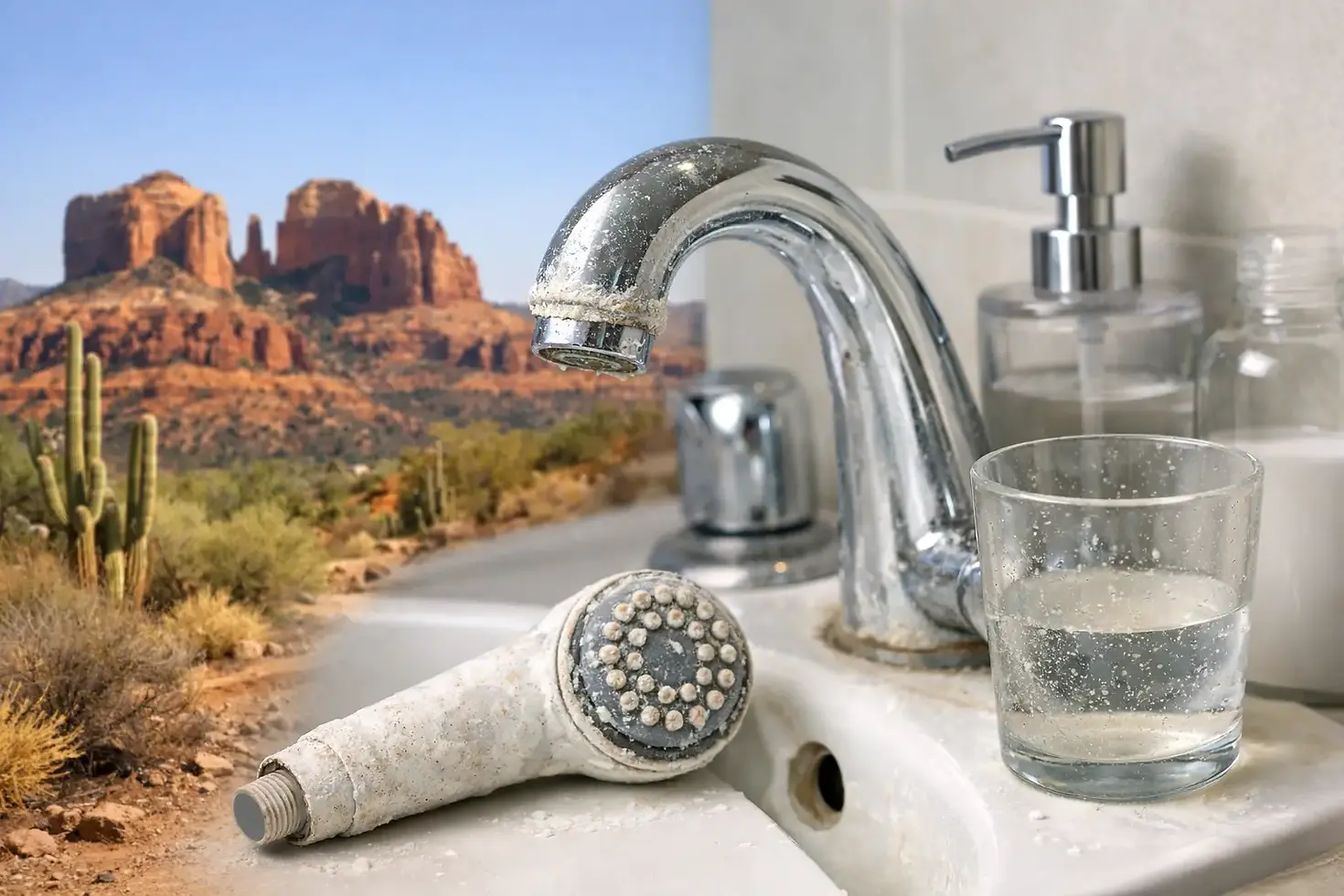
That white crust around your faucet is not a cleaning failure. It is Arizona water doing what Arizona water does. This guide to Arizona hard water problems is for Valley homeowners who are tired of spotty dishes, stiff laundry, rough-feeling skin, and appliances that seem to age before their time.
Hard water is not usually an alien-level plumbing emergency. But ignored for years, mineral buildup can turn into expensive trouble inside water heaters, fixtures, pipes, and equipment. The good news is that you do not have to guess at the cause or buy the biggest system someone tries to sell you.
Why Arizona Homes Deal With Hard Water
Hard water contains dissolved minerals, mainly calcium and magnesium. As water moves through rock and soil before reaching the municipal supply, it picks up those minerals. In much of the Phoenix Valley, the mineral content is high enough to leave a visible trail throughout the house.
When water dries on a shower door, faucet, or glass, the water evaporates and the minerals stay behind. Inside your plumbing, the same process happens out of sight. Heated water makes the issue move faster, which is why water heaters, dishwasher components, and showerheads often show the first signs.
Water hardness can differ by city, neighborhood, and even water source. Seasonal supply changes can also affect what comes through your tap. That is why a real water test is more useful than treating every Goodyear or Valley home as if it has the exact same needs.
Common Arizona Hard Water Problems
Hard water leaves clues long before a pipe fails. You may see them one at a time or all over the house.
White Scale on Fixtures and Glass
Chalky white residue on faucets, showerheads, tile, and glass doors is the classic sign. A little scale can often be cleaned off. The problem is that it returns quickly because the minerals are still in the water.
Scale is more than a cosmetic headache. It can clog the tiny openings in a showerhead, make faucet aerators spray unevenly, and leave fixtures looking worn even when they are not that old.
Spots on Dishes and Dull Laundry
If your dishwasher leaves cloudy glasses or your dark clothes come out feeling stiff and faded, hard water may be part of the story. Minerals interfere with soap, so detergent does not rinse and perform the way it should. Many homeowners respond by adding more soap, which can leave even more residue behind.
Dry Skin and Uncooperative Hair
Hard water is not necessarily unsafe to drink or bathe in, but it can make daily routines less comfortable. Some people notice soap that will not lather well, a film on their skin after showering, or hair that feels dry and difficult to manage. A softener will not solve every skin or hair concern, but it can remove the mineral factor.
Reduced Water Heater Efficiency
This is where hard water can get costly. Mineral sediment settles in tank-style water heaters and can coat heating surfaces. Your system may need to work harder to heat water, take longer to recover, or make popping and rumbling noises as water heats beneath sediment.
Tankless water heaters are not immune, either. Their internal passages need periodic descaling, especially in hard-water areas. Skipping maintenance can reduce performance and may shorten the equipment's useful life.
Slow Fixtures and Stubborn Plumbing Repairs
A slow showerhead is sometimes just a clogged showerhead. A faucet with weak flow may have a scale-packed aerator. In older homes, years of mineral accumulation can compound other plumbing issues. Not every low-pressure problem is hard water, though. A leak, failing pressure regulator, corroded pipe, or supply issue needs a proper diagnosis before anyone starts replacing parts.
A Guide to Arizona Hard Water Problems: Softener or Filter?
This is the question that trips up plenty of homeowners. Water softeners and water filters do different jobs, and one is not automatically a substitute for the other.
A traditional water softener is designed to reduce hardness minerals. It uses a process called ion exchange, replacing calcium and magnesium with sodium or potassium. The practical payoff is less scale, better soap performance, gentler laundry, and more protection for fixtures and water-using appliances.
A filtration system targets contaminants, taste, odor, or specific water-quality concerns. For example, a point-of-use drinking water system can improve the water at a kitchen sink, while a whole-house filter can address certain issues before water enters the home. Filtration alone may not stop hard-water scale unless it is specifically designed to address hardness.
Many Valley homes benefit from both approaches: a softener for the whole house and a separate drinking-water filter where the family fills glasses and cooking pots. But it depends on your water test, household size, plumbing setup, and priorities. Straight talk matters here. If scale is your main frustration, a basic filter may not deliver the result you expect. If drinking-water taste is your top concern, a softener alone is not the whole answer.
What to Check Before Buying a Water Softener
A water softener should fit the home, not the sales pitch. An oversized unit can cost more than necessary, while an undersized one may regenerate too often and struggle to keep up with your household.
Start with water hardness and iron testing. Then consider how many people live in the home, how many bathrooms are in regular use, and whether you have high-demand fixtures or appliances. A family with multiple showers, frequent laundry, and a large water heater has different needs than a two-person household.
Also ask where the equipment will go. Most systems need a practical location near the main water line, power when required, and a suitable drain connection for regeneration. The installer should inspect this instead of making promises over the phone without seeing the setup.
Salt-based softeners are the most established choice for serious hardness reduction, but they require salt and periodic maintenance. Salt-free conditioning systems have less hands-on upkeep and may help reduce scale behavior in certain situations, but they do not remove minerals in the same way. If you want the slicker feel of softened water and maximum scale reduction, understand that trade-off before choosing a system.
Simple Habits That Limit Scale Damage
A softener is the long-game solution, but a few regular habits can protect your plumbing in the meantime. Wipe down shower glass and fixtures after use so mineral-rich water does not dry in place. Clean faucet aerators and showerheads when flow changes. Use dishwasher products suited to hard water, and do not assume extra detergent is the fix.
Keep up with water heater maintenance, too. A tank water heater may need flushing to remove sediment, while tankless equipment needs proper descaling on a schedule that matches your water conditions and manufacturer guidance. This is not glamorous work, but it can prevent a cold-shower surprise at the worst possible moment.
If you already have a softener, check the salt level and make sure it is actually regenerating. A softener that is out of salt, set incorrectly, or bypassed after a repair will not protect the home. If scale suddenly returns, do not assume the whole system needs replacing. It may need adjustment, service, or a quick repair.
When It Is Time to Call a Plumber
Call for help when scale is paired with low water pressure, recurring water heater noises, leaks, rusty or discolored water, or a sudden loss of hot-water performance. Those symptoms may involve hard water, but they can also point to a separate plumbing problem that deserves attention.
A knowledgeable local plumber can test the water, inspect the plumbing layout, explain the options in plain English, and recommend a system sized for the way your home actually uses water. The Arizona Plumber approaches hard-water concerns the same way it approaches a clogged drain or failing water heater: find the real problem first, then fix it without the out-of-this-world sales pressure.
Your faucets do not have to keep growing their own white armor. A simple water test and an honest look at your home's needs can put you on the right path toward cleaner fixtures, happier appliances, and one less Arizona chore on your weekend list.


Comments