
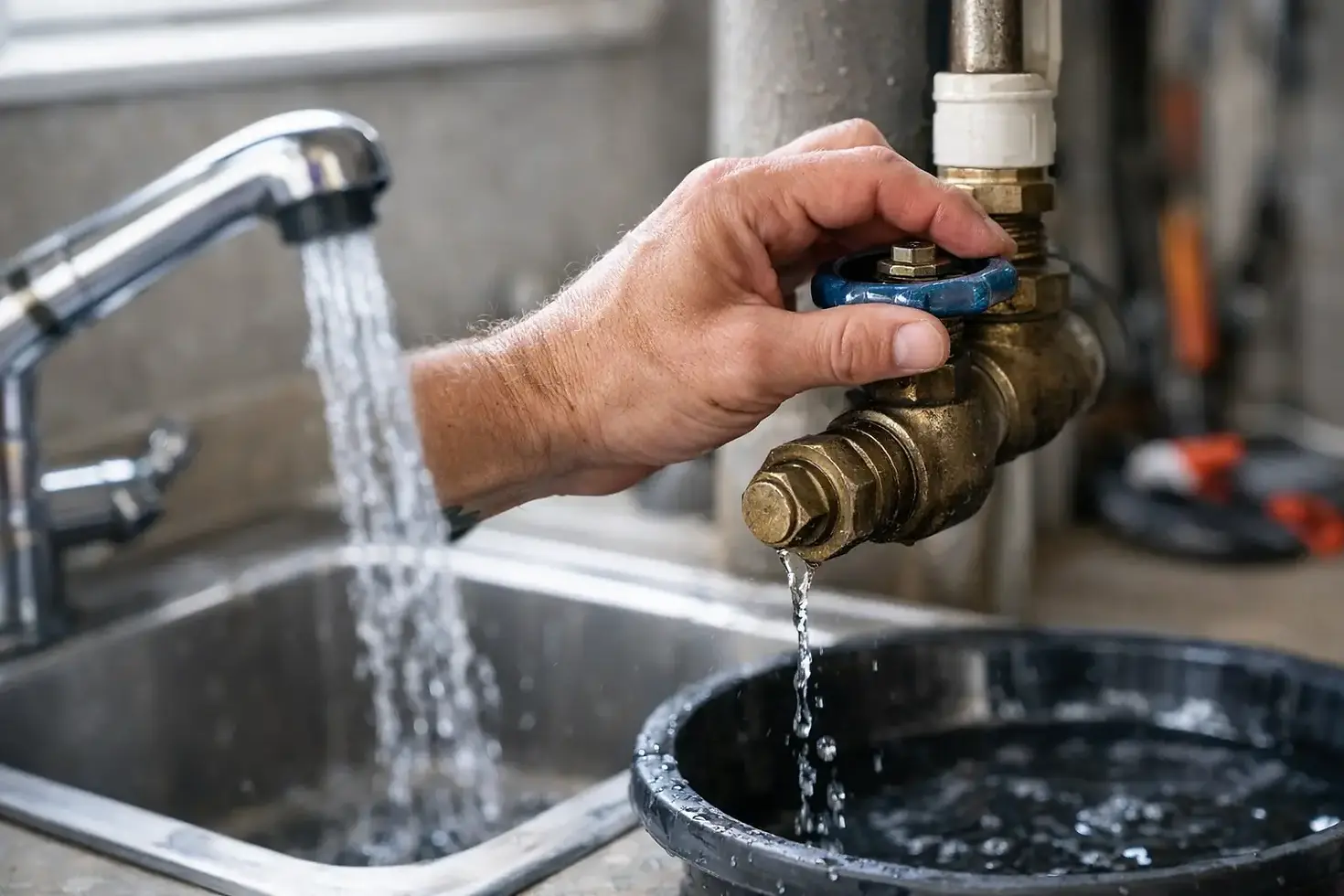
How to Shut Off Water Fast at Home

Water spraying under a sink is not the time to start guessing. If a pipe bursts, a toilet will not stop running, or your water heater starts leaking like it is trying to flood the whole house, knowing how to shut off water fast can save your floors, cabinets, drywall, and a whole lot of money.
Around Goodyear and the Phoenix Valley, a plumbing problem can go from annoying to full-blown chaos in minutes. The good news is that most homes have more than one way to stop the water. The trick is knowing which valve to turn, where it is, and when to stop trying DIY fixes and call a plumber.
How to shut off water fast when every second counts
The fastest move depends on where the leak is coming from. If it is one fixture, like a toilet or sink, you usually do not need to shut water off to the whole house. If you have a burst pipe, a major slab leak, or water pouring from somewhere you cannot isolate, go straight to the main shutoff.
Start by staying calm and looking at the source. A sink leak, toilet overflow, washing machine hose failure, and water heater leak all have different shutoff points. If the leak is heavy and you are not sure where it started, skip the detective work and shut off the main water valve first. You can always narrow things down after the immediate mess is under control.
If electrical outlets, cords, or appliances are near standing water, do not step into the area until it is safe. Water and power are a nasty combo. If you need to, shut off electricity to the affected area from the breaker panel, but only if you can do it without walking through water.
Find the main water shutoff before you need it
If you only remember one thing from this article, make it this: find your main water shutoff now, not during a plumbing emergency.
In many Arizona homes, the main shutoff is outside near the front of the house, along the side yard, or in a ground-level utility box near the street or property line. Sometimes there is also a house-side shutoff where the water line enters the home. In older homes, locations can vary, so it is worth taking ten minutes to track it down.
There are usually two common styles. A ball valve has a lever handle. Turn it a quarter turn until it is perpendicular to the pipe, and the water should stop. A gate valve has a round handle and takes several turns clockwise to close. These older valves can be stubborn, especially if they have not been touched in years.
If the valve will not budge, do not force it so hard that you break it. A broken shutoff valve can turn a bad day into an alien-level disaster. Try steady pressure. If it is stuck and water is actively flooding the house, you may need the city meter shutoff, which often requires a meter key and a careful hand. If you are not comfortable with that, call for emergency plumbing help right away.
What happens after you shut off the main valve
Turning off the main valve stops fresh water from entering the house, but it does not instantly empty the pipes. Open a cold water faucet at the lowest point in the house, if you can, to help relieve pressure and drain some remaining water. If the issue is with hot water lines or the water heater, turn off the water heater as well. For electric units, shut off power at the breaker. For gas units, set the control to pilot or off if the manufacturer instructions allow it.
That step matters because a water heater can be damaged if it keeps heating without proper water supply.
How to shut off water fast at specific fixtures
A lot of plumbing emergencies are local. If you can isolate the problem, you can keep the rest of the house running while you deal with the repair.
Sink shutoff valves
Look under the sink. You should see one or two small shutoff valves on the wall or floor where the supply lines connect. Turn them clockwise until snug. Do not crank them down with all your strength. If the leak is coming from the faucet or supply line, this should stop the flow quickly.
If the valves under the sink do not fully close, that is common in older homes. In that case, you may need to use the main shutoff.
Toilet shutoff valve
The toilet shutoff is usually on the wall behind or beside the toilet near the floor. Turn it clockwise to stop water feeding the tank. If the toilet is overflowing, remove the tank lid and lift the float if you can while reaching for the valve. That can buy you a few seconds.
If the shutoff fails and the toilet keeps filling, use the main water shutoff. Toilets are famous for going from minor annoyance to bathroom flood faster than people expect.
Washing machine shutoff
Behind the washer, there should be hot and cold supply valves. Turn both off. If a washing machine hose bursts, these valves are your first move. If the area is hard to reach or the leak is severe, go to the main shutoff instead.
This is one of the most common causes of sudden indoor water damage, especially with aging rubber hoses.
Water heater shutoff
If the water heater is leaking from a supply line or the tank itself, turn off the cold water supply valve above the unit. Then shut off the power source. If the tank is actively leaking from the bottom, the leak will not stop completely just because the supply is off, but you will stop new water from entering.
A leaking water heater is usually not a wait-and-see situation. Once the tank itself fails, replacement is often the only real fix.
Refrigerator and ice maker line
If water is pooling near the fridge, pull it out carefully and look for a small shutoff valve on the wall behind it or in a nearby cabinet. Turn it clockwise. These little lines are easy to forget until they fail.
When the problem is outside
Outdoor leaks can still waste a huge amount of water, but they are usually less destructive to the home unless water is getting into the foundation or garage. Hose bibs, irrigation lines, and exposed outdoor pipes may have local shutoffs, though many do not. If you cannot isolate the line, use the main shutoff.
In the Valley, extreme heat, shifting soil, and aging materials can all take a toll on pipes and valves. What worked fine last summer can suddenly give up without much warning.
A few mistakes to avoid
The biggest mistake is waiting too long because the leak seems small. A slow drip under pressure can soak cabinets, swell baseboards, and create hidden damage behind walls. Shut it off first. Figure out the repair second.
Another mistake is turning the wrong valve. Gas valves, irrigation controls, and appliance switches can all be nearby. If you are unsure, follow the water line visually before you turn anything.
And be careful with old shutoff valves. Some have not been touched in years. If a valve looks corroded, feels loose, or starts leaking around the stem when you turn it, stop and reassess. You may have solved one problem and uncovered another.
When to call a plumber right away
Some situations are not worth experimenting with. If water is coming through ceilings, if the main valve will not close, if you suspect a slab leak, or if a pipe has split inside a wall, it is time to get a pro involved fast.
The same goes for commercial properties. A leak in a break room sink is one thing. A failed line affecting restrooms, tenant spaces, or a water heater serving a business can shut operations down fast. In those cases, quick isolation and a proper repair matter more than trying to patch it together.
At The Arizona Plumber, this is the kind of real-world emergency we see all the time. The homes and buildings that avoid the worst damage are usually the ones where someone knew where the shutoff was and acted quickly.
The smart move is practice, not panic
The best time to learn how to shut off water fast is on a normal day when nothing is leaking. Walk through your home. Find the main valve. Check the shutoffs under your sinks and behind your toilets. Make sure adults in the house know where they are and how they work.
If a valve is frozen, missing, or unreliable, that is worth fixing before the next emergency shows up. Good shutoff valves do not get much attention, but when a pipe bursts at 9 p.m. or a toilet decides to go rogue before work, they are the unsung heroes.
Plumbing problems do not care if you are in the middle of dinner, asleep, or already having a long day. But a little preparation gives you a way to hit the brakes fast, protect your home, and keep a bad leak from turning into a full-scale indoor swamp.


Comments