
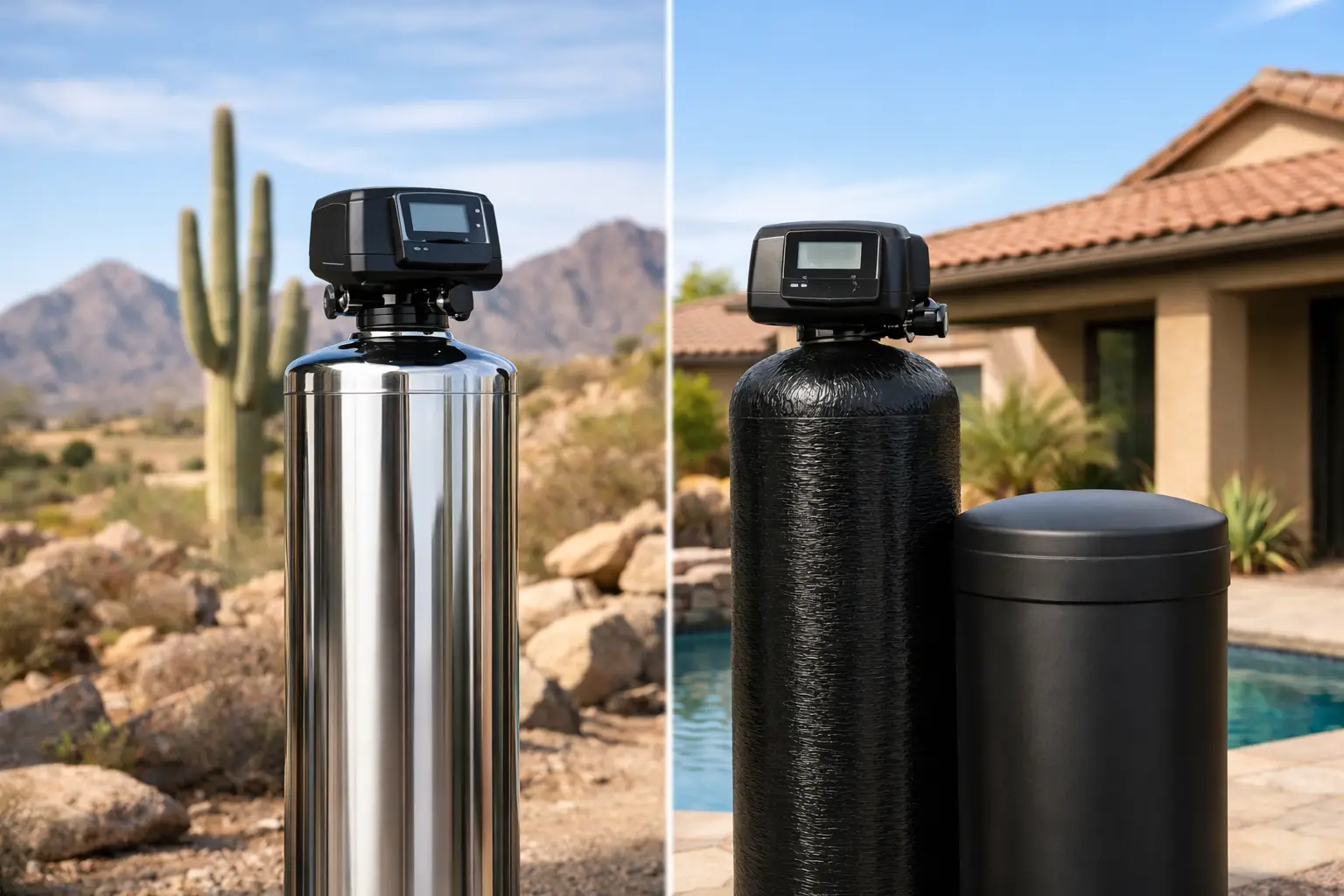
Water Conditioner Versus Softener for Arizona Homes

That white crust around your faucets is not an alien invasion. It is hard-water mineral buildup, and it is a familiar sight in Goodyear and across the Phoenix Valley. When homeowners compare a water conditioner versus softener, the real question is usually simple: Which system will protect my plumbing, fixtures, and appliances without buying more equipment than I need?
The straight answer is that these systems do different jobs. A water softener actually removes hardness minerals from the water. A water conditioner generally changes how those minerals behave, helping reduce scale buildup without removing them. Both can have a place in an Arizona home, but they are not interchangeable.
Water Conditioner Versus Softener: The Core Difference
Hard water contains dissolved calcium and magnesium. Arizona water often carries plenty of both. Those minerals can leave spots on glassware, clog showerheads, coat water heater components, and build a stubborn layer inside pipes over time.
What a water softener does
A traditional water softener uses a process called ion exchange. Water passes through resin beads that attract calcium and magnesium. In exchange, the system releases a small amount of sodium or potassium into the water. The hardness minerals are removed, which is why softened water feels different on your skin and helps soaps and detergents work more effectively.
A softener also runs a regeneration cycle. It uses salt or potassium pellets and water to rinse the collected minerals from the resin. That means the system needs a drain connection, a nearby power source in most cases, and periodic salt refills.
For homes with significant hard-water damage, a properly sized softener is often the heavy-duty solution. It can reduce scale in water heaters, dishwashers, washing machines, fixtures, and plumbing lines. It will not repair a failing water heater or magically erase years of buildup, but it can help prevent the problem from getting worse.
What a water conditioner does
Water conditioner is a broad term, and that is where the confusion begins. Some salt-free conditioners use a media process often called template-assisted crystallization. The minerals remain in the water, but the system changes their structure so they are less likely to cling to hot surfaces and form hard scale.
Other products marketed as conditioners use magnets, electronic signals, or other methods. Results can vary widely, and some claims are far ahead of real-world performance. If someone promises that a tiny device will solve every hard-water problem without maintenance, replacement media, or a proper water test, keep your wallet in the spaceship for a minute.
A quality salt-free conditioner may be a good fit for people who want scale protection without hauling salt bags or sending regeneration water to a drain. But because the minerals are still present, you may continue to see water spots. You also will not get the same slippery feel, lather improvement, or hardness reduction that comes with a traditional softener.
Why the Difference Matters in Arizona
Phoenix Valley water conditions vary by city, neighborhood, and water source, but hard water is common throughout the area. The sun also puts extra demand on water heaters, irrigation equipment, and plumbing systems that already work hard year-round.
If your main complaint is scale collecting on fixtures and you want a lower-maintenance option, a conditioner may make sense. If you are tired of stiff laundry, cloudy dishes, dry-feeling skin, soap scum, and recurring mineral buildup, a softener is usually the more complete answer.
There is also a cost and maintenance trade-off. Softeners typically cost more to operate because they need salt or potassium, use water during regeneration, and may need service over time. Conditioners generally have less routine upkeep, though their media still has a service life and needs replacement based on water use and manufacturer specifications.
Neither system is automatically better. The right choice depends on your water chemistry, household size, plumbing goals, and how much maintenance you are willing to take on.
How to Choose the Right System for Your Home
Start with the problem you actually want to solve. If you are replacing showerheads every few years, seeing scale on the water heater, or fighting buildup on faucets, both approaches deserve a look. If you want the minerals removed rather than simply managed, choose a true water softener.
A household with several people, multiple bathrooms, and a large water heater needs a system sized for real demand. Installing a small unit because it looked like a bargain can create low pressure, inconsistent performance, or frequent regeneration. On the flip side, an oversized system can waste salt and water.
Water quality testing should guide the recommendation. Hardness is commonly measured in grains per gallon, but a good assessment may also consider iron, chlorine, sediment, pH, total dissolved solids, and other local conditions. Those details affect whether you need prefiltration, a specific type of resin, or a separate drinking-water filter.
That last point matters. A softener is not a full filtration system. It does not necessarily remove chlorine, lead, bacteria, or every dissolved contaminant you may be concerned about. A conditioner is not a drinking-water purification system either. Many homes benefit from combining scale control with filtration, but the setup should solve a real need, not a sales pitch.
Installation Details That Should Not Be Ignored
A whole-home softener or conditioner needs more than a spot in the garage. It should be installed where it can treat the home’s incoming water supply while preserving the plumbing connections that should remain untreated, such as certain exterior hose bibs. The location also needs adequate space for access and future service.
For a softener, the drain line must be installed correctly. Poor drain routing, bad air-gap connections, or incorrect programming can cause leaks, wasted water, and a system that never performs the way it should. The bypass valve also matters. It lets you service the equipment without shutting off water to the entire house.
Conditioners need correct flow direction, proper pipe sizing, and installation that matches the product’s requirements. If sediment is heavy, a prefilter may be needed to protect the media. These details are not glamorous, but they separate a system that works for years from one that becomes another garage headache.
Commercial properties have an added layer to consider. A restaurant, salon, office building, or multifamily property may have higher flow demands and expensive equipment to protect. A system that is fine for a three-bedroom home may be nowhere close to enough for a busy commercial application.
Get Advice Based on Your Water, Not a Script
The best water treatment recommendation starts with a conversation about your home and a look at the actual water conditions. Ask what minerals are being addressed, whether the system removes hardness or only manages scale, what maintenance it requires, and what it will not fix. A trustworthy plumber should answer those questions plainly.
The Arizona Plumber helps Valley homeowners make that call without turning a simple water-quality concern into an expensive science project. Whether you need a traditional softener, a salt-free conditioning option, filtration, or just an honest answer that you do not need a new system yet, the goal is the same: protect your plumbing and make daily water use easier.
Before you buy, look at the evidence already sitting in your home. Check the faucets, water heater, shower glass, dishes, and appliance connections. Those everyday clues, paired with a proper water test, will point you toward a solution that makes sense long after the sales pitch has faded.


Comments