
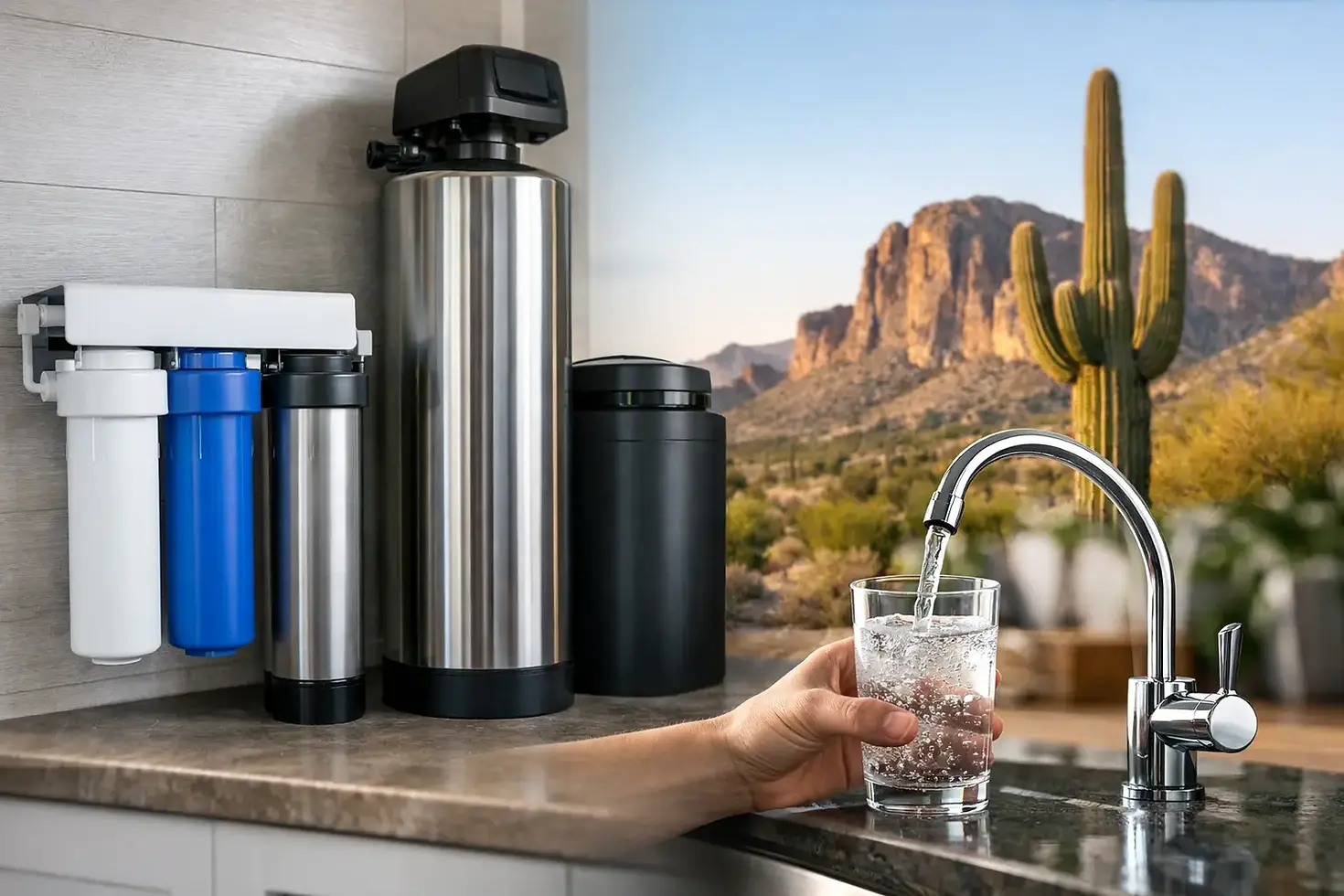
Water Filtration Options for Arizona Homes

That white crust around your faucets is not an alien invasion, but it is a familiar sight in Arizona homes. Valley water is safe for municipal use, yet many homeowners are tired of mineral buildup, chlorine taste, dry skin, spotty dishes, and drinking water that just does not taste right. Water filtration gives you more control over what comes out of the tap, but the right solution depends on what you want to improve.
A good system should solve a real problem in your home, not create a bigger sales pitch. Whether you want cleaner-tasting drinking water at the kitchen sink or better water throughout the house, understanding the options helps you spend wisely and avoid equipment that is more than you need.
What Water Filtration Can Improve
Water filtration is not one single product. Different filters are designed to reduce different materials, odors, or tastes. Some are built for one faucet. Others treat the water entering your entire home.
For many Phoenix Valley households, the biggest complaint is chlorine taste or odor. Municipal systems use disinfectants to keep water safe as it travels through the supply lines. That is a necessary part of public water service, but it can leave water tasting like a swimming pool to some people. Carbon filtration is often the practical answer for improving taste and smell.
Other homeowners notice sediment, cloudy water, or small particles coming through older pipes or after work is done on nearby utility lines. A sediment filter can capture those particles before they reach fixtures, appliances, or a drinking-water filter. If your concern is specific contaminants, a more specialized system may be appropriate, but that decision should be based on a water test and your household's needs, not fear-based marketing.
Filtration can also make everyday routines more pleasant. Coffee may taste better. Ice can smell cleaner. Refillable water bottles become easier to enjoy. For families that buy cases of bottled water every week, an under-sink drinking-water system can be a practical long-term change.
Filtration and Water Softeners Are Not the Same Thing
This is where plenty of homeowners get mixed messages. A water filter and a water softener can work together, but they do different jobs.
A water softener addresses hardness minerals, mainly calcium and magnesium. Those minerals are behind the scale buildup on shower doors, fixtures, dishes, and inside appliances. Hard water can also make soap harder to rinse and leave skin or hair feeling dry. In the Arizona Valley, hard water is a common home plumbing issue.
A filtration system is focused on improving water quality characteristics such as taste, smell, sediment, chlorine, or certain contaminants. A standard filter will not reliably solve heavy scale buildup, and a standard softener will not necessarily remove chlorine taste from your drinking water.
Some homes benefit from both. A whole-home softener can protect plumbing fixtures, water heaters, and appliances from mineral scale, while a drinking-water filter at the kitchen sink improves the water your family consumes. The best setup depends on your priorities, your budget, and the condition of your existing plumbing.
Common Water Filtration Systems for Valley Homes
Under-Sink Reverse Osmosis Systems
Reverse osmosis, often called RO, is a popular choice for homeowners who want highly filtered drinking water at one dedicated faucet. The system typically sits inside the kitchen sink cabinet and sends water through several filtration stages before storing it in a small tank.
RO systems can reduce a broad range of dissolved materials, making them a solid option for drinking water, cooking, coffee, and ice makers. The trade-off is that they require room under the sink, regular filter changes, and professional installation to ensure the drain connection and shutoff valves are handled correctly. They also produce wastewater as part of the filtration process, so they are not always the best fit for every household.
Carbon Filtration
Activated carbon filters are widely used because they are effective at reducing chlorine taste and odor. They are available as faucet filters, countertop units, refrigerator filters, under-sink systems, and whole-home systems.
If your water is clear and your main complaint is the taste or smell, carbon filtration may be all you need. It is often simpler and less expensive than reverse osmosis. The key is staying on top of cartridge replacement. An old filter does not keep doing its job just because it is still sitting in the housing.
Whole-House Filtration
A whole-house filter is installed where the main water line enters the home. That means filtered water can serve showers, bathroom sinks, laundry, and kitchen fixtures, not just one faucet.
This approach can make sense if chlorine odor bothers you in the shower, if you have noticeable sediment, or if you want a first layer of protection for the plumbing system. Whole-home systems vary widely. Some use sediment filtration only, while others combine multiple media types to target chlorine, odors, or other concerns. Installation should account for water pressure, pipe size, bypass valves, drainage needs, and future maintenance access.
Sediment Filters
Sediment filters are straightforward workhorses. They trap sand, rust flakes, dirt, and other visible particles before those materials travel deeper into the plumbing system. They are especially useful in homes with older plumbing, private wells, or recurring sediment concerns.
On their own, sediment filters will not remove dissolved minerals or fix chlorine taste. They are often installed as a first stage before other equipment, helping protect more expensive filters from clogging too quickly.
How to Choose the Right System
Start with the problem you actually notice. If your drinking water tastes off but everything else in the home is fine, an under-sink carbon or RO system may be the sensible route. If every shower door, faucet, and appliance has a scale problem, you may need a softener in addition to filtration. If you see particles in the water, sediment filtration should be part of the conversation.
Next, consider how much water you want treated. Point-of-use filtration handles one location, usually the kitchen. Point-of-entry filtration treats the whole house. A whole-home system costs more up front and needs a suitable installation location, but it provides broader coverage.
Maintenance matters too. Every filtration system has a service schedule. Cartridges need replacement, tanks may need periodic attention, and water softeners need salt if they use a conventional regeneration process. Ask what replacement parts cost, how often service is needed, and whether the system will be easy to access once it is installed. Honest answers here are more valuable than a flashy showroom demonstration.
Finally, do not ignore your plumbing. An aging shutoff valve, cramped cabinet, corroded supply line, or poorly located drain can turn a simple install into a more involved repair. A qualified plumber should look at the complete setup before recommending equipment.
Signs Your Existing Filter Needs Attention
Filters do not always fail with a dramatic warning. More often, they slowly lose performance. A return of chlorine smell, a drop in water pressure, strange taste, cloudy ice, or water that begins bypassing the system can all point to overdue maintenance.
For whole-home filters, pressure loss is especially worth watching. A heavily loaded sediment cartridge can restrict water flow throughout the home. That can feel like a plumbing problem when the filter is actually the culprit. On the other hand, low pressure may also come from a failed pressure regulator, a leak, or mineral buildup in pipes, so it is worth having the issue diagnosed rather than guessing.
Keep a simple note of filter change dates near the system or in your phone. It is a small habit that helps protect your investment and prevents the classic moment when everyone realizes the filter should have been changed six months ago.
Get a Setup That Makes Sense for Your Home
Water treatment should feel practical, not mysterious. The right system can improve the water you drink, protect fixtures from unnecessary buildup, and reduce the hassle of hauling bottled water home. But no single filter is right for every Goodyear or Phoenix Valley home.
The Arizona Plumber can help assess your plumbing, explain the real options in plain English, and install a filtration or softening system built around your household rather than a one-size-fits-all package. Start with the water issue that bugs you most, then choose a solution that keeps working long after the sales pitch has disappeared.


Comments