
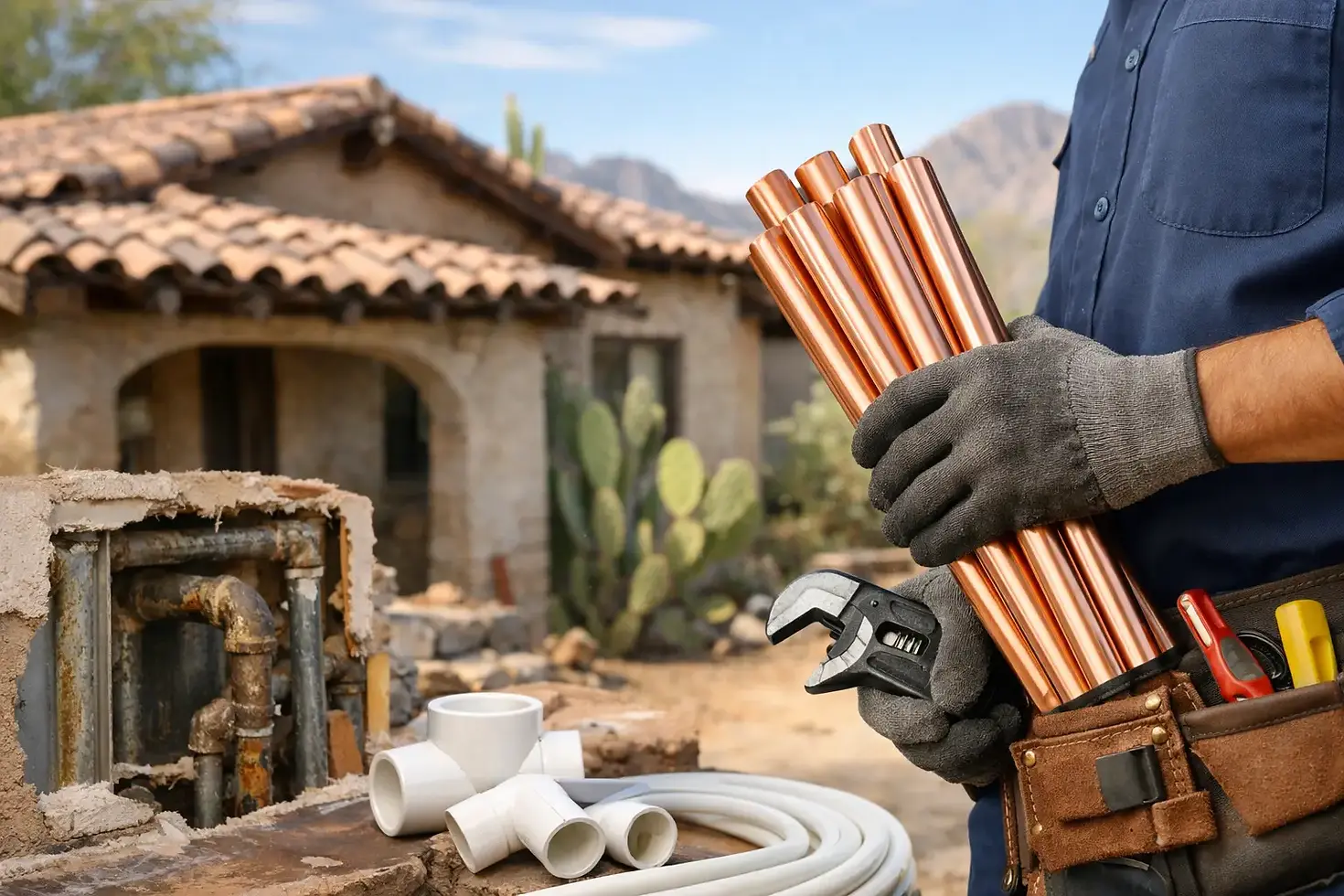
Why Re-Piping Matters for Old Arizona Homes

That random drop in water pressure at the shower. The rusty tint in the sink. The slab leak that shows up out of nowhere and wrecks your week. If you've ever asked why is re-piping important for old homes in Arizona, the short answer is this: old pipes in the Valley take a beating, and waiting too long usually gets expensive fast.
Arizona homes deal with a rough plumbing environment. Hard water is a big part of it, but it's not the only villain in the story. Older materials, desert heat, shifting soil, and years of daily use all work together to wear a plumbing system down from the inside out. In a newer home, that might show up as a minor repair here and there. In an older home, it can turn into a constant cycle of leaks, patch jobs, drywall cuts, and higher water bills.
Why is re-piping important for old homes in Arizona?
Because old pipes rarely fail in a neat, convenient way. They fail one leak at a time until the pattern becomes obvious.
A lot of Arizona homes built decades ago still have aging galvanized steel, copper with problem spots, or other outdated piping materials that have seen better days. Once those lines start corroding, scaling up, or pinhole leaking, each repair only buys time. It does not reset the system. It just patches one weak point while the rest of the plumbing keeps aging.
That matters in Arizona because hard water speeds up mineral buildup inside pipes. Over time, that buildup narrows the inside of the line, chokes water flow, and puts more strain on the whole system. You might notice weaker pressure at one fixture first, then another. Then the water heater starts working harder. Then a leak shows up behind a wall. That's how these things snowball.
Re-piping is important because it solves the bigger issue instead of chasing symptoms. If the system is old enough and damaged enough, replacing the piping can save a homeowner from repeated repairs, property damage, and the stress of never knowing where the next leak will hit.
Arizona adds pressure old plumbing systems can't always handle
In other parts of the country, old pipes have their own set of problems. In Arizona, the environment adds a little extra chaos.
Hard water is the headline issue for many homes across the Phoenix Valley. Mineral-heavy water leaves scale inside supply lines, around fixtures, and inside water heaters. That buildup doesn't just affect appliances. It reduces pipe efficiency and can create hot spots and pressure problems that shorten the life of the system.
Then there's heat. Arizona's extreme temperatures can affect plumbing materials over time, especially in attics, exterior walls, and exposed areas. Add in natural expansion and contraction, and older pipe joints can start to weaken. If the home has any history of shifting soil or slab movement, the risk goes up even more.
None of that means every older Arizona home needs a full re-pipe tomorrow. But it does mean homeowners here should pay attention sooner, not later. Pipes that might limp along in a milder climate can break down faster under Valley conditions.
The signs your old home may be past basic pipe repair
Some homes have one isolated issue and a targeted repair makes perfect sense. Other homes keep sending up flares.
If you're getting frequent leaks in different areas, that's usually a sign the problem is systemic, not random. Discolored water can point to corrosion inside older lines. Low water pressure throughout the house often means internal buildup or deterioration. Strange noises in the pipes, water spots with no clear source, and unexplained spikes in the water bill can all point to trouble hiding behind walls or under the slab.
Age matters too. If your home's plumbing is several decades old and made from materials known for corrosion or failure, repairs become more of a gamble. At a certain point, paying for leak after leak starts to cost more than dealing with the actual root issue.
This is where straight talk matters. Not every plumber gives it to you. Sometimes a repair is the honest answer. Sometimes the truth is that your home is one more pinhole leak away from another expensive mess. A good inspection should help you understand which side of that line you're on.
Re-piping can protect more than your pipes
Homeowners usually think about plumbing in terms of water getting from point A to point B. Fair enough. But when old pipes fail, the damage spreads far beyond the plumbing itself.
Leaks can soak drywall, ruin flooring, damage cabinets, and create conditions for mold. A slab leak can lead to major repair costs that have nothing to do with the pipe itself. Even smaller leaks can quietly waste water for months, driving up your bill while damaging parts of the home you don't see every day.
A re-pipe helps reduce that risk because it replaces the aging network before it keeps failing in hidden places. It can also improve daily life in ways homeowners notice right away. Better pressure. More consistent hot water. Cleaner-looking water. Less worry every time someone runs the dishwasher while another person is in the shower.
For older homes that homeowners plan to keep for years, that peace of mind is a real benefit. You're not just replacing pipes. You're taking a fragile system off life support.
Repair or re-pipe? It depends on the pattern
This is the part where honesty beats scare tactics.
A single leak does not automatically mean you need a full re-pipe. If the plumbing system is in otherwise solid shape, a focused repair may be the smart move. The same goes for a newer section of piping with one bad connection or one damaged area caused by a specific event.
But if repairs are stacking up, the logic changes. Multiple leaks in different sections of the home usually mean the system is wearing out as a whole. If the pipe material is outdated, the water quality is affected, and the pressure keeps dropping, patching becomes a temporary fix with a permanent invoice.
Homeowners sometimes hesitate because re-piping sounds like a massive project. It is a serious job, no question. But so is opening walls every few months to chase the next leak. The right choice depends on age, material, leak history, access, and budget. That's why a real assessment matters.
Why old Arizona homes benefit from acting early
Waiting until a plumbing system completely fails is rarely the cheapest plan.
When homeowners act early, they usually have more options. They can schedule work before an emergency hits. They can plan around family routines. They can compare repair history against the long-term value of replacement. Most importantly, they can avoid the kind of all-hands-on-deck plumbing disaster that always seems to show up at the worst possible time.
Old homes in Arizona often have a lot of character, and that's part of the appeal. But charming homes still need reliable infrastructure. Updated plumbing supports the rest of the house. It protects the kitchen and bathrooms you've invested in. It helps water-using appliances run better. It can even make the property more attractive to future buyers who don't want to inherit a pipe system from another era.
For homeowners in Goodyear and across the Valley, this isn't about getting talked into a shiny upgrade you don't need. It's about knowing when your plumbing has moved from repairable to unreliable. That line matters.
A local, owner-led company like The Arizona Plumber sees the same pattern in older Valley homes all the time: hard water, aging lines, repeat leaks, and homeowners who are tired of throwing money at symptoms. The goal should always be the same - fix what's real, explain it clearly, and do the job right.
If your old home's plumbing has been acting like it's one bad day away from an alien-level meltdown, trust that instinct. Pipes don't usually get better with age. A careful look now can save you a pile of damage, stress, and surprise costs later. Sometimes the best plumbing fix is the one that finally lets you stop worrying every time you hear water running behind a wall.


Comments