
When to Call a Toilet Installation Plumber

A toilet should sit solid, flush cleanly, and stay dry at the base. When it rocks, leaks, clogs constantly, or looks like it belongs in a different solar system, a toilet installation plumber can help you get the problem fixed without turning a simple bathroom upgrade into a bigger mess.
For homeowners across Goodyear and the Phoenix Valley, toilet replacement is often about more than appearance. An older toilet may waste water, have worn internal parts, or hide a failing seal beneath the bowl. The right installation protects your flooring, your subfloor, and your peace of mind.
What a Toilet Installation Plumber Actually Does
Installing a toilet is not just a matter of setting a new bowl on the floor and tightening a couple of bolts. The work starts with checking the existing shutoff valve, supply line, drain opening, floor condition, and toilet flange. The flange is the fitting that connects the toilet to the drainpipe. If it is cracked, corroded, set too low, or loose, a brand-new toilet can still leak.
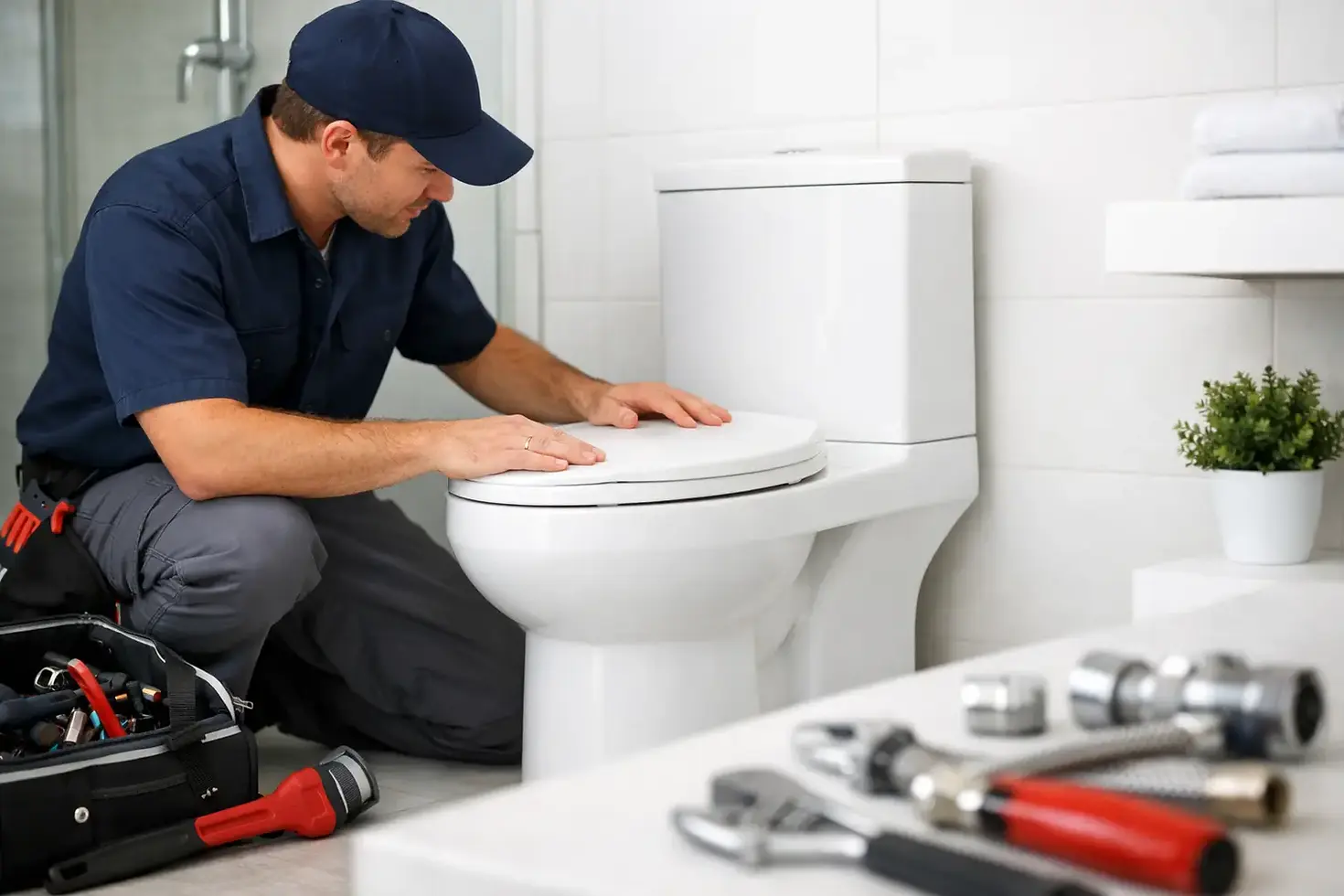
A professional plumber removes the old fixture carefully, checks for hidden damage, prepares the connection, installs a proper seal, secures the toilet without overtightening it, reconnects the water supply, and tests every part of the job. That includes several flushes, a leak check at the base and supply line, and making sure the toilet does not wobble.
That process matters because water can travel quietly. A small leak under a toilet may soak into flooring or subflooring long before a homeowner sees a puddle. By the time the floor feels soft or stains appear downstairs, the repair can involve more than the toilet itself.
Signs It Is Time to Replace Your Toilet
Some toilet problems are repairable. A weak flush may come from a worn flapper, a bad fill valve, or mineral buildup. A running toilet can often be repaired with inexpensive parts. But there are times when replacement is the smarter long-term call.
Cracks in the bowl or tank are a clear red flag, even if the leak seems minor. Porcelain cracks do not heal, and they can spread without warning. Water around the base is another reason to act quickly. It could be condensation or a spill, but it may also point to a failed wax ring, a damaged flange, or a cracked toilet.
A toilet that rocks when someone sits down should not be ignored. Movement can break the seal at the drain connection and create a leak below the floor. In some cases, the fix is as straightforward as correcting the mounting and stabilizing the fixture. In others, the floor or flange needs repair first.
Replacement is also worth considering when an older toilet clogs regularly, uses a lot of water, or needs one repair after another. There is no prize for keeping a fixture alive through endless patch jobs. If the toilet has become a recurring headache, replacing it can be the more honest and cost-effective answer.
Choosing the Right Toilet for Your Bathroom
The best toilet is not always the most expensive one on the shelf. It needs to fit your bathroom, your plumbing layout, and the people using it every day.
Start with the rough-in measurement. In many homes, the drain center is about 12 inches from the finished wall behind the toilet, but 10-inch and 14-inch rough-ins exist. Buying the wrong size can leave the tank too far from the wall or prevent the toilet from fitting at all. A plumber can verify the measurement before you commit to a fixture.
Bowl shape matters too. Round-front toilets take up less room and can be useful in smaller bathrooms. Elongated bowls generally offer more comfort but extend farther into the room. Chair-height models can be easier for many adults, seniors, and people with mobility concerns, while a standard-height toilet may work better for young children.
Water efficiency is another factor in Arizona. Modern toilets can use far less water per flush than older models, which is good for household water use and monthly bills. Still, low water use is only helpful when the toilet performs well. A quality fixture with a reliable flush is usually a better choice than a bargain model that clogs and needs repeat flushing.
If you are upgrading for comfort, features such as dual flush options, skirted bases, bidet seats, and easier-to-clean designs may be worthwhile. Just remember that specialty fixtures can involve electrical work, nonstandard parts, or more complicated future service. It depends on how you use the bathroom and how simple you want maintenance to be.
What Can Change the Cost of Toilet Installation?
Homeowners understandably want a straight answer on price. The fixture itself is only one part of the cost. A basic replacement where the shutoff valve, supply line, flange, floor, and drain are all in good shape is usually more straightforward than an installation with hidden problems.
Costs can change if the old toilet is difficult to remove, the flange needs repair, the shutoff valve is seized or leaking, the floor is damaged, or the plumbing needs to be moved for a new layout. Moving a toilet is a different category of work because it may require opening the floor, changing drain and vent piping, and handling permits where required.
This is where an on-site inspection beats a guess over the phone. A trustworthy plumber should explain what is working, what is not, and what is truly necessary before the job moves forward. No smoke, no mirrors, no surprise alien-level disaster added to the invoice just because someone showed up.
Why DIY Toilet Installation Can Go Sideways
A handy homeowner can sometimes replace a toilet successfully, especially if it is a simple like-for-like swap. But the risks are real. Porcelain is heavy and brittle. Overtightening bolts can crack the base or tank. A poorly seated seal may not leak immediately, which means the problem can remain hidden under the toilet.
The bigger concern is what you cannot see until the old fixture is removed. A rusted flange, deteriorated subfloor, damaged drainpipe, or aging shutoff valve can turn a Saturday project into an urgent plumbing repair. If the toilet has been leaking, rocking, or backing up, it is wise to have a professional assess the connection instead of covering up the warning signs.
DIY can make sense when you have the right tools, the installation is uncomplicated, and you are comfortable handling the unexpected. Calling a plumber makes more sense when you want the work checked properly, the old toilet hauled away, and the bathroom returned to service without guesswork.
Questions to Ask Before Hiring a Toilet Installation Plumber
You do not need a plumbing degree to hire well. Ask whether the plumber will inspect the flange and floor condition, replace worn supply components when needed, test for leaks, and explain any added repairs before doing them. Those answers tell you more than a flashy advertisement ever will.
It also helps to ask whether the company handles both residential repairs and larger plumbing needs. A team that understands drain lines, water supply connections, fixture installation, and commercial restrooms can look beyond the visible toilet when the situation calls for it.
The Arizona Plumber approaches toilet work the same way it approaches every home service call: show up ready to diagnose the real issue, communicate clearly, and do the job right. Sometimes that means a quick repair. Sometimes it means replacement. Either way, you deserve an answer that fits your home instead of a sales pitch.
Do Not Wait on a Leak at the Toilet Base
If water is appearing around the toilet, the floor feels soft, the fixture rocks, or the bathroom has a sewer smell, do not keep flushing and hope it sorts itself out. Shut off the water supply if there is an active leak, avoid using that toilet, and have the connection inspected as soon as possible.
A properly installed toilet is one of those everyday comforts you barely notice, which is exactly the point. Get the right fit, a solid seal, and honest workmanship, then get back to using your bathroom without wondering what is happening under the floor.


Comments